Restaurant menu sizes and how to plan a printed menu
Standard restaurant menu sizes, from single sheets to folded menus, inserts and table tents, with layout and paper tips for menus that last.
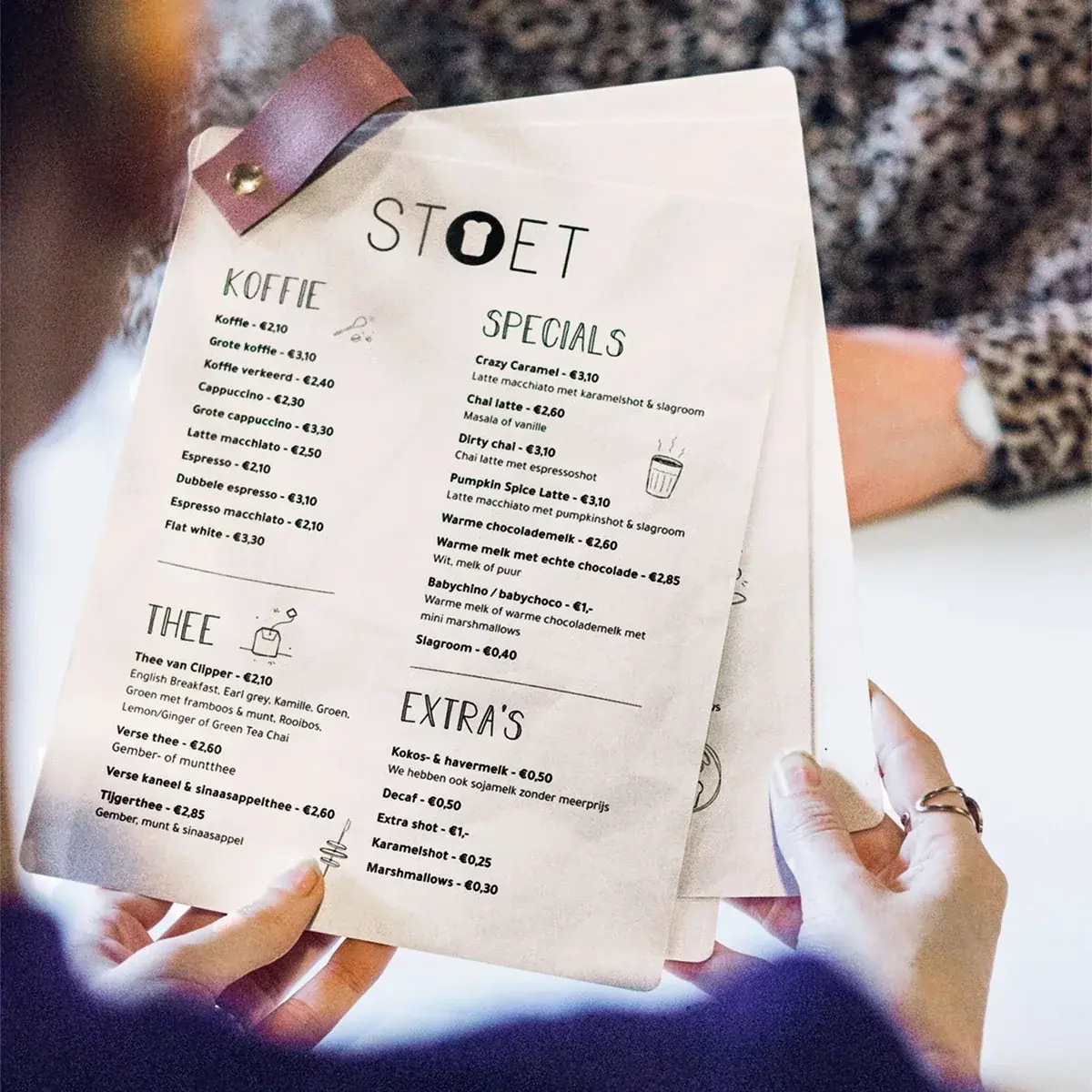
Most restaurant menus are printed on a few standard paper sizes, because standard sizes are faster and less expensive to print and easier to replace. The right size depends on how many items you list, how the menu is handed out and how often it changes. This guide lists the common menu sizes and covers layout, paper and ways to reduce reprints.
To price a menu, see our eco friendly menu printing.
Menu sizes at a glance
- 8.5 x 11 in (letter): the most common single-page menu. It suits cafes, lunch menus and smaller dinner menus.
- 8.5 x 14 in (legal): a taller single page for longer menus, often used for dinner and wine lists.
- 11 x 17 in (tabloid): a large single page, or folded in half to make a four-panel 8.5 x 11 in menu.
- 4.25 x 11 in: a narrow card for drinks, desserts, specials or inserts.
- 5.5 x 8.5 in: a half-letter card for dessert, kids and brunch menus.
- Booklets: several pages bound together for large menus and wine lists.
Folded menus
An 8.5 x 14 in or 11 x 17 in sheet folded into panels makes a tri-fold or bi-fold menu. Folded menus suit takeout and delivery, because they fit in a bag and can be mailed or left on a counter. A tri-fold printed on 8.5 x 11 in paper folds to about 3.67 x 8.5 in. Our flyer and brochure size guide covers folded panel sizes in more detail.
Inserts and specials
Prices and daily specials change more often than the main menu. A small insert or clip-on card lets you update specials without reprinting the whole menu, which saves money and paper. Common insert sizes are 4.25 x 11 in and 4.25 x 5.5 in.
Table tents
Table tents stand on the table to promote drinks, desserts, events or a QR code. Common finished sizes are 4 x 6 in and 5 x 7 in per side. A table tent is printed flat and scored so it folds into a triangle or an A shape, so the flat sheet is a little more than twice the finished height.
How to plan the menu layout
- Group items into clear sections and list the sections in the order of the meal.
- Keep descriptions short, one or two lines per item.
- Use a body type size of at least 10 to 12 points, and larger for dim dining rooms.
- Align prices consistently after each description rather than in a column that invites comparison.
- Leave white space around each section so the menu is easy to scan.
- Print a test copy at full size and read it in the dining room lighting before you order.
Paper choices
- Disposable or frequently changed menus: a recycled text or light cover stock keeps the cost per menu low.
- Reusable menus: a heavy recycled cover stock, such as 100lb cover or 14pt to 16pt, holds up to handling.
- Menus that need wiping: a water-resistant synthetic can be wiped clean during service.
Plastic laminate makes a menu last but cannot be recycled with paper. A heavy uncoated or matte stock that you replace when the menu changes is often the lower-impact choice. For the rest of the table, see custom paper coasters and printing for restaurants and hospitality.
Common questions
What is the standard menu size?
8.5 x 11 inches is the most common size for a single-page menu. 8.5 x 14 inches and folded 11 x 17 inch menus are common for longer menus.
What size is a table tent?
Common finished table tent sizes are 4 x 6 inches and 5 x 7 inches per side.
What paper is best for restaurant menus?
A heavy recycled cover stock works well for menus that are reused, and a water-resistant synthetic suits menus that need to be wiped clean.
How can I change prices without reprinting the menu?
Print daily specials and prices that change often on an insert or clip-on card, and keep the main menu for items that stay the same.
Products mentioned in this piece
Everything below prints on recycled, FSC-certified stock with soy-based inks. Ask for a quote on any of it.
Printing something like this?
Thirty-six years of sourcing recycled stock, put to work on your job. Tell us what you need and Greg will come back with stock options, a price and a date.