Recycled paper business cards and the stocks we print them on
Recycled paper business cards are printed on stock made from post consumer waste rather than virgin fiber. The choice you are making is which recycled sheet, at which weight, with which finish.

A recycled paper business card is a standard card printed on stock made from post-consumer waste rather than virgin fiber. Everything else about it stays the same. The size is still 3.5 by 2 inches unless you ask for something else, the ink still has to sit cleanly on the surface, and the card still has to hold up in a wallet. The real choice is which recycled stock to use, at which weight, and with which finish.
We are Eco Friendly Printer. Greg Barber started the company in Northport, New York in 1990 and it is still family run. The business is now based in Ponte Vedra Beach, Florida. We print eco friendly business cards on 100 percent recycled, FSC certified stock using soy-based inks and chlorine-free bleaching, and we ship nationwide.
What makes a card recycled, and what does not
Three things determine whether a card is a genuinely recycled product.
- Post-consumer waste content. This is paper that was already used and collected, not mill offcuts. A stock described as 100 percent PCW contains no virgin fiber. Lower percentages are common and are still an improvement, but a printer should state the percentage rather than just the word "recycled."
- Chain of custody. FSC certification tracks the fiber back through the supply chain. It is the part of the claim that can be verified by someone other than the printer.
- How it was bleached. Chlorine-free processing avoids the chlorine compounds used to brighten conventional stock. On a card, this also helps a white recycled sheet keep a natural paper look.
A green logo, a leaf icon or a line of text on the back saying the stock is eco friendly does not make a card recycled. If a printer cannot name the mill and the paper, the claim is not supported.
The stocks we print business cards on
Uncoated 100 percent post consumer
This is our standard stock and the one most clients choose. It is made entirely from post-consumer waste, FSC certified and chlorine free. The surface is matte with a slight tooth, so it takes a pen well, which is useful when someone wants to write a name or a price on the back. Ink absorbs slightly into the paper rather than sitting on top, so colors look softer than they do on screen. It is best to plan your design with that in mind.
Recycled kraft board
Kraft is the brown stock with visible fiber. It has a rough texture and a clearly recycled look, which suits food businesses, trades, makers and any brand built around natural materials. Dark ink and blind embossing work well on it. Light ink and photographic images do not, because the brown background shifts every color printed on it.
Coated recycled stock
If your card includes a photograph or a saturated brand color, a coated recycled sheet holds the image better than uncoated. The tradeoff is that a coated surface is harder to write on and slightly harder to recycle. We recommend it only when the artwork needs it.
Cotton
Cotton cards are made from cotton linters, the short fibers left over from cotton processing. They are tree free, naturally bright white and have a soft, subtle texture. They cost more than a standard recycled sheet. They are a good choice when the card is meant to make a strong impression, for example for studios, consultants and anyone handing cards to a small number of people who will keep them.
Seed paper and handmade stock
Plantable seed paper has wildflower seeds embedded in the sheet, so the card can be planted after use. Handmade sheets without seeds have an uneven, deckled edge that a press finish cannot reproduce. Both are thicker and less uniform than machine-made stock, so keep type large and detail simple, and expect small variations between cards. These stocks are best for short runs and events rather than a standing order of several thousand.
Weight, thickness and how the card feels
Thickness affects the perceived quality of a card more than any finish. A 14pt card feels standard, while a 16pt or 18pt card feels more substantial. Cotton and handmade stocks are generally thicker because the fiber is bulkier, which is part of why they feel different. Laminating two sheets together with a colored core is possible, but it uses twice the paper, so we only suggest it when that effect is central to the design.
If you are unsure, ask about paper samples when you request a quote, and see our paper samples page for details on our stocks. Handling a few sheets is the easiest way to compare them.
Ink, and the finishes worth having
We print with soy-based inks. The pigment is the same as in conventional ink, but the petroleum carrier is replaced with soybean oil. This lowers the volatile organic compounds released as the ink sets and makes the ink easier to remove from the fiber when the card is eventually recycled.
For finishing, the most sustainable option and the best-looking option are usually the same:
- Blind embossing and debossing add texture using a die and pressure. They add no ink, foil or coating to the sheet, so nothing has to be separated later. On heavy uncoated stock, this is one of the best-looking finishes available.
- Foil stamping looks excellent but adds a thin metallic layer to the sheet. If recyclability matters to you, use it in small areas, such as on a logo rather than across a whole panel.
- Lamination bonds a plastic film to the paper and makes the card difficult to recycle. We usually recommend a heavier uncoated sheet instead.
- Rounded corners and die cutting change the shape without changing the material. Both work on recycled stock, although very fine die-cut detail can chip on the more fibrous sheets.
Are recycled business cards recyclable
An uncoated card printed with soy-based ink can go in household paper recycling. It will also break down in a compost pile, although slowly. A laminated card will not do either. Foil, heavy metallic ink and plastic coatings all reduce the chance that the card will be processed rather than removed from the recycling stream. This is why we recommend uncoated stock: it is sustainable both when it is made and when it is thrown away.
Quantities, turnaround and files
We print short runs, and minimums vary by product, so you do not need to buy two thousand cards to use recycled stock. Print the quantity you will hand out in the next year or so. A box of unused cards with an outdated phone number is wasted paper.
Typical turnaround is 1-2 weeks from artwork approval. Send a print-ready PDF where possible, with fonts embedded, artwork built to the trim size and a bleed on anything that runs off the edge. If your files are not print ready, tell us what you have and we will let you know what is needed.
Designing for recycled stock
There are two practical points to keep in mind. First, uncoated and kraft stocks absorb ink, so a color will print a shade or two duller and warmer than it appears on screen. Muted palettes, single colors and clean geometric layouts all print well, but a large area of solid dark ink does not, because it shows roller marks. Second, leave enough open space. A card with a name, a role, one phone number and one address is easier to read than a card with five ways to reach you, and it uses less ink.
If your cards are part of a larger set, the same stocks are available for letterhead and envelopes, so your whole identity can use one paper family. You can read more about our printing for small businesses and for events and trade shows.
Order your cards
Tell us the stock, the weight and the quantity, or tell us what the card is for and we will suggest options. Start your order and we will reply with a quote and a schedule.
Products mentioned in this piece
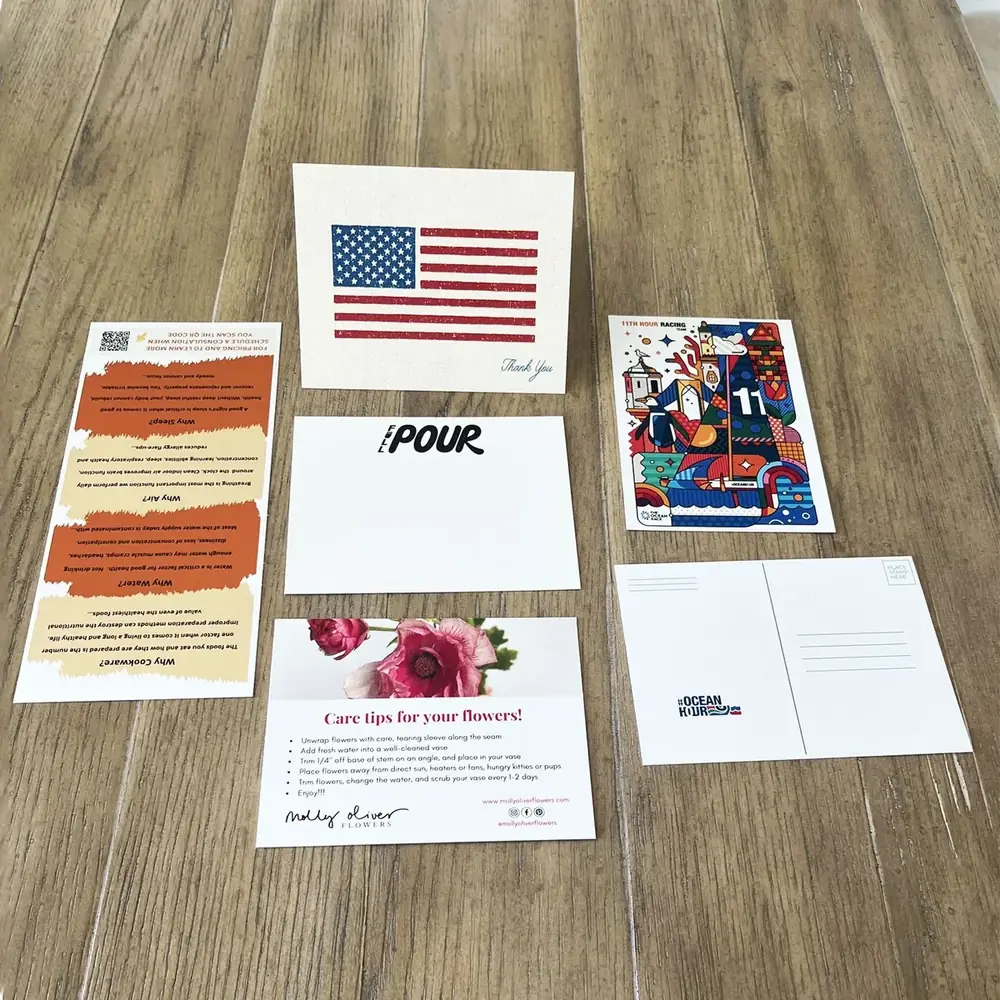
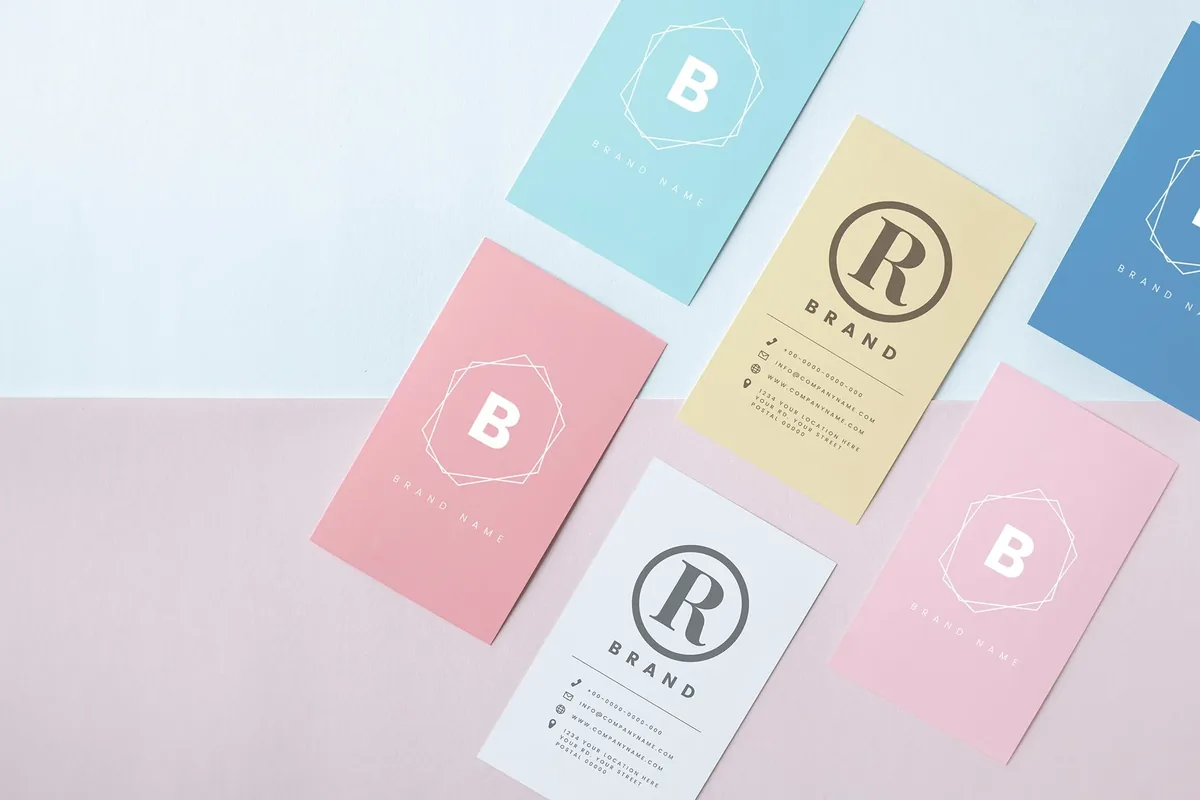
Everything below prints on recycled, FSC-certified stock with soy-based inks. Ask for a quote on any of it.
Printing something like this?
Thirty-six years of sourcing recycled stock, put to work on your job. Tell us what you need and Greg will come back with stock options, a price and a date.