Brochure folds: how to fold a tri-fold, bi-fold and other brochures
Tri-fold, bi-fold, z-fold, gate and accordion folds compared, with tri-fold panel sizes for 8.5 x 11 in and tips for folding heavy paper.

The most common way to fold a brochure is the tri-fold, also called a letter fold, where an 8.5 x 11 in sheet is folded into three panels with one panel tucked inside. A bi-fold, or half fold, folds the sheet once in the middle. Other folds, such as the z-fold, gate fold and accordion fold, change how the reader opens the brochure and how much space each panel has.
To price folded brochures, see our brochure printing page.
How to fold a tri-fold brochure
A tri-fold brochure has six panels, three on each side. To fold one by hand, follow these steps.
- Lay the sheet flat with the inside panels facing up.
- Fold the right panel in toward the center along the first fold line.
- Fold the left panel over it, so the front cover ends up on top.
- Crease each fold firmly with a bone folder or the edge of a ruler.
Tri-fold panel sizes for an 8.5 x 11 in sheet
Dividing 11 in into equal thirds gives panels of about 3.6667 in. In practice, the panel that folds inside is made slightly narrower so it does not buckle against the outer fold. A common layout uses these widths:
- Front cover and middle panel: 3.6875 in each.
- Fold-in panel: 3.625 in.
- Finished size: about 3.69 x 8.5 in, which fits a standard #10 envelope and most brochure racks.
Mark the fold lines in your file with guides, and keep text at least 0.125 in away from each fold so it does not wrap around the edge. Our guide to flyer and brochure sizes lists folded sizes for larger sheets as well.
Common brochure fold types
- Bi-fold (half fold): one fold in the center, which gives four panels. An 8.5 x 11 in sheet folds to 5.5 x 8.5 in, and an 11 x 17 in sheet folds to 8.5 x 11 in.
- Tri-fold (letter fold): two folds with one panel tucked inside, which gives six panels.
- Z-fold: two folds in opposite directions, so the sheet opens like the letter Z. All three panels can be the same width.
- Gate fold: the two outer panels fold in to meet at the center, like a pair of doors. Each outer panel is slightly less than a quarter of the sheet width, and the center panel is about half.
- Accordion fold: three or more parallel folds in alternating directions, used for maps, schedules and step-by-step guides.
- Roll fold: four or more panels rolled in toward the center, with each inner panel slightly narrower than the one before it.
- Double parallel fold: the sheet is folded in half and then folded in half again in the same direction, which gives eight panels. Menus and maps often use this fold.
Choosing a fold for your content
The right fold depends on how the reader should move through the content.
- Bi-fold: works well for menus, programs and short sales pieces with large photos.
- Tri-fold: fits a good amount of content in a size that suits a rack or a #10 envelope.
- Z-fold: suits content that reads in sequence across three panels.
- Gate fold: opens to a large center spread and works well for product launches and invitations.
- Accordion and roll folds: suit longer content, such as maps, timelines and price lists.
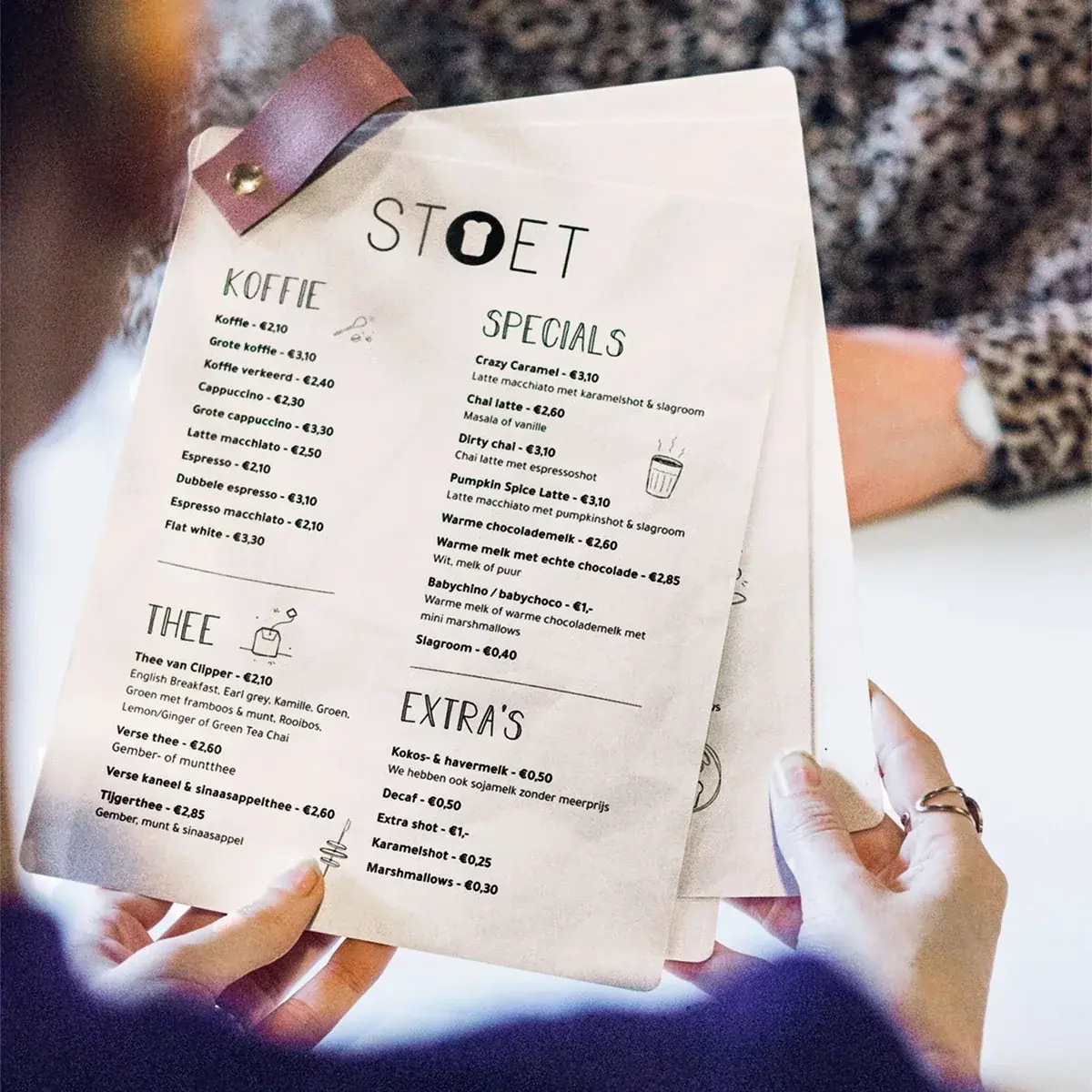
For display racks, a 4 x 9 in rack card is an unfolded alternative to a tri-fold. Restaurants often use a bi-fold or double parallel layout for printed menus.
Scoring heavy paper before folding
Cover stocks and heavier text papers should be scored before they are folded. Scoring presses a crease line into the sheet so the fibers bend cleanly instead of cracking along the fold. Cracking is most visible when dark ink or a full-color image runs across the fold. Folding parallel to the grain of the paper also gives a cleaner fold. Recycled papers fold well when they are scored correctly, and choosing the right weight from the start avoids wasted sheets. Our paper weight guide explains text and cover weights.
Common questions
How do you fold a tri-fold brochure?
With the inside facing up, fold the right panel in toward the center, then fold the left panel over it so the front cover is on top.
What is the difference between a tri-fold and a z-fold?
In a tri-fold, one panel tucks inside the other two. In a z-fold, the folds go in opposite directions and the sheet opens like the letter Z.
What size is a bi-fold brochure?
An 8.5 x 11 in sheet folds to 5.5 x 8.5 in, and an 11 x 17 in sheet folds to 8.5 x 11 in.
Why are tri-fold panels different widths?
The panel that folds inside is made about 1/16 in narrower than the others so it sits flat without buckling against the fold.
Products mentioned in this piece
Everything below prints on recycled, FSC-certified stock with soy-based inks. Ask for a quote on any of it.

Printing something like this?
Thirty-six years of sourcing recycled stock, put to work on your job. Tell us what you need and Greg will come back with stock options, a price and a date.