What is cardstock? Weights, thickness and uses
Cardstock is heavier and stiffer than ordinary printer paper. This guide explains how cardstock is measured, the common weights and finishes, and which cardstock suits each kind of print job.

Cardstock is paper that is thicker, heavier and stiffer than the text paper used in office printers and for flyers. It is used for business cards, invitations, greeting cards, postcards, covers and anything that needs to stand up or hold its shape.
Printers usually call cardstock cover stock, and the two terms mean the same thing. This guide explains how cardstock is measured and which weight suits each job.
How cardstock is measured
In the United States, cardstock is listed by its weight in pounds, such as 80 lb cover or 110 lb cover. The pound number is the weight of 500 sheets at the paper's basic size. Because text paper and cover paper use different basic sizes, an 80 lb cover is much heavier than an 80 lb text.
Grams per square meter (gsm) is a simpler measure. Higher gsm always means a heavier sheet, whatever the paper type. Most papers above about 170 gsm are considered cardstock.
Thickness is measured in points, where one point is one thousandth of an inch. A 16pt card is 0.016 in thick. Our paper weight guide converts pounds, gsm and points in more detail.
Common cardstock weights
- 65 lb cover (about 176 gsm): light cardstock for folded flyers, menu inserts and crafts.
- 80 lb cover (about 216 gsm): brochure covers, programs and light postcards.
- 100 lb cover (about 270 gsm): postcards, greeting cards and book covers.
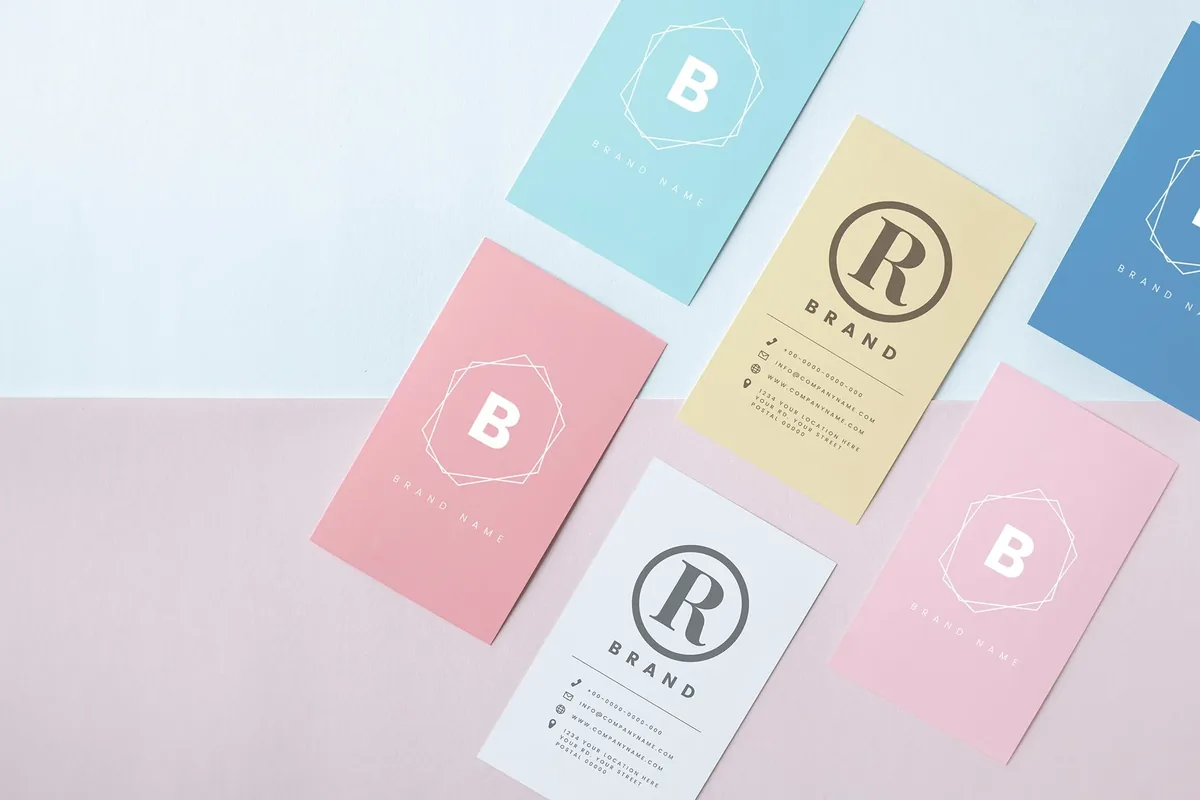
- 110 lb to 130 lb cover (about 300 to 350 gsm): business cards, invitations and premium postcards.
- 16pt and heavier: thick business cards and postcards. A 32pt card is usually two sheets pressed together.
Cardstock finishes
- Uncoated: a natural feel that is easy to write on. Most recycled cardstock is uncoated.
- Matte and silk coated: smoother surfaces that print photographs sharply without much shine.
- Gloss coated: a shiny surface for bright, saturated color.
- Felt and linen: textured surfaces for stationery and invitations.
- Cotton: soft, thick and tree-free, popular for letterpress. See cotton paper.
- Kraft: a natural brown sheet for tags, cards and packaging. See kraft paper.
Which cardstock to use
- Business cards: 110 lb to 130 lb cover or 16pt. See business cards.
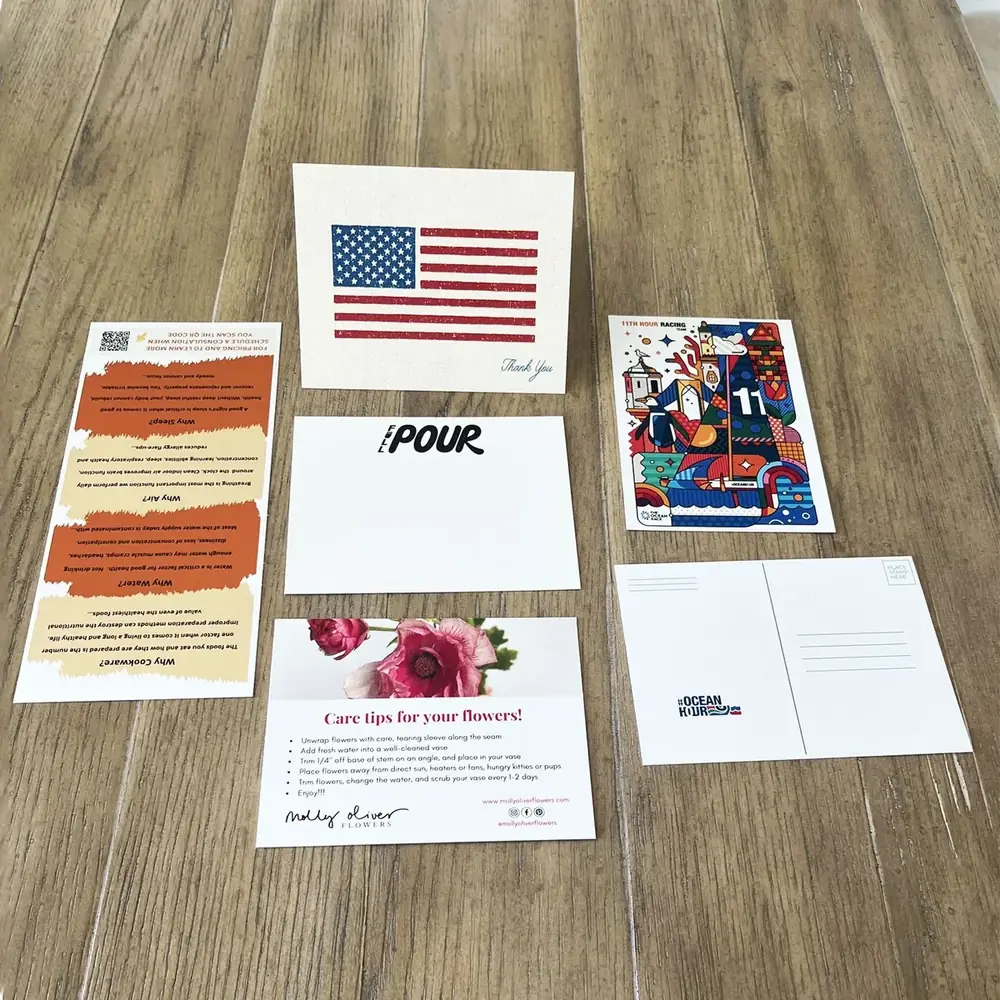
- Postcards: 100 lb to 130 lb cover. USPS requires postcards to be at least 0.007 in thick.
- Greeting cards and invitations: 100 lb to 130 lb cover, or 110 lb cotton.
- Brochure and booklet covers: 80 lb to 100 lb cover.
- Hang tags and table tents: 14pt to 18pt, or heavier board for tags.
Printing cardstock at home
Many home and office printers accept light cardstock, but heavy cardstock can jam or print poorly. Check the maximum paper weight in the printer's manual, and use the manual or rear feed tray if the printer has one. For heavy stocks, coated finishes and larger quantities, a commercial press gives cleaner results.
Recycled cardstock
Recycled cardstock comes in the same weights and finishes as cardstock made from new fiber, including stocks with 100% post-consumer recycled content. Uncoated recycled cardstock can go back into paper recycling. Plastic laminates, glitter and foil-covered stocks are harder to recycle. Our paper stocks page lists the recycled cover stocks we print on most.
Common questions
What is cardstock?
Cardstock is thick, stiff paper, usually 65 lb cover (about 176 gsm) and heavier, used for cards, invitations, postcards and covers.
Is cardstock the same as cover stock?
Yes. Printers and paper mills usually call it cover stock, and the weights are listed as lb cover.
What weight cardstock is best for business cards?
110 lb to 130 lb cover, or 16pt, gives a business card a sturdy feel. Heavier duplex cards are available for a thicker card.
Is cardstock recyclable?
Uncoated cardstock is accepted in most paper recycling programs. Cardstock with plastic lamination or glitter is harder to recycle.
Products mentioned in this piece
Everything below prints on recycled, FSC-certified stock with soy-based inks. Ask for a quote on any of it.

Printing something like this?
Thirty-six years of sourcing recycled stock, put to work on your job. Tell us what you need and Greg will come back with stock options, a price and a date.