How to choose eco friendly wedding invitations
We print wedding invitations on 100% recycled, FSC-certified paper with soy-based inks. This guide explains how to choose the stock, the printing method and the rest of the suite.
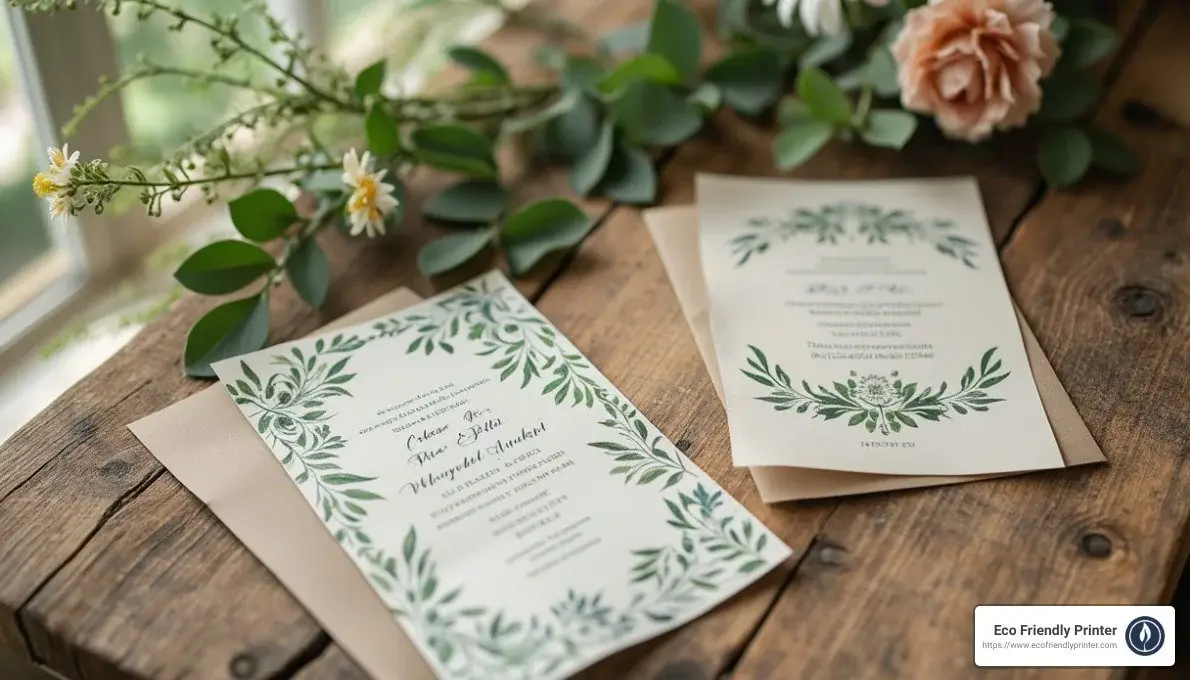
An eco friendly wedding invitation is one printed on 100% recycled, FSC-certified stock with soy-based inks and chlorine-free bleaching. Those three elements define it. Everything else, including the weight of the sheet, the texture, the foil and the envelope, is a design decision you make on top of that foundation.
We have been printing invitations this way since 1990. Below is what we offer, what each paper does, and what to consider before you order. If you already know what you want, go straight to wedding invitations.
What makes an invitation eco friendly
Three factors do most of the work.
- Recycled fiber. Post-consumer waste paper is made from paper that has already been used and collected for recycling. Choosing it means no new trees are cut for your invitation suite.
- Chlorine-free processing. Bleaching pulp with chlorine compounds produces the most harmful effluent in papermaking. The stocks we buy are processed chlorine free.
- Soy-based ink. Soy inks replace the petroleum carrier in conventional offset ink. They release far fewer volatile compounds, and they are easier to remove when the paper is recycled again.
A product that claims to be green without covering all three of these is only doing part of the job. We explain how the pieces fit together on our why eco printing page.
The papers we print wedding invitations on
We buy from a short list of mills we trust: Sustana EnviroPrint, Monadnock Astrolite PC 100, Neenah Environment and Mohawk Loop. Between them, they cover almost every look couples ask for.
Cardstock
Cardstock is the standard and safest choice. It is thick and rigid, takes a crisp print, and holds up well in the mail. It comes in a wide range of shades and finishes, from smooth to felt to linen. Most invitation suites are built on a card weight sheet with lighter inserts.
Cotton and linen finishes
These finishes give you the soft, slightly textured surface people associate with formal stationery. They feel heavier in the hand than they actually weigh. Cotton and linen surfaces also hold an impression best, so if you want a deep letterpress impression or a blind emboss, these are the papers to start with.
Kraft and natural shades
These are unbleached and lightly bleached stocks in oatmeal, cream and warm gray. They suit outdoor, rustic and garden weddings, and both dark ink and white ink look deliberate on them.
Vellum and tissue overlays
An overlay is a translucent sheet laid over the invitation, usually held with a band or a wax seal. It is a layering technique rather than a paper choice, and it adds one more piece to the envelope, so include it when you calculate postage.
Seed paper
Seed paper is a handmade sheet with wildflower or herb seeds embedded in the pulp. Guests can plant the card, and as the paper breaks down, the seeds grow. It is a nice idea and leaves very little behind. There are two practical points to keep in mind. Seed paper is thick, uneven and absorbent, so fine type and thin lines do not hold on it the way they do on a smooth sheet. It is also best used for a single-sided card rather than a full suite. Talk to us about it early and we will let you know whether your artwork suits it.
Matching the paper to the printing method
The look you have saved on your phone usually comes from a printing method rather than a particular paper.
- Flat printing. The ink sits on the surface. Flat printing works on every stock we carry, holds the finest detail, and is the least expensive way to print color and photography.
- Metallic ink. Reflective particles in the ink give a shimmer without a separate foil pass. It looks best on a smooth or lightly textured sheet and is a lower-cost way to add a gold or copper accent than foil stamping.
- Foil stamping. A thin metallic film is pressed into the sheet with heat and a die. It is the brightest finish available and works best on a heavier stock. Recycled cardstock takes foil the same way a virgin sheet does.
- Embossing. Embossing is a raised impression without ink, usually used for a monogram, crest or border. It pairs well with foil on the same element, and cotton and felt surfaces show it best.
There are two limits worth knowing. Every extra pass on press adds a day or two and a setup cost, so a two-color flat print with one foil accent is often a good balance of cost and effect. Heavily textured stock will also soften very fine serifs, so if your typeface has thin strokes, ask about paper samples when you request a quote.
The rest of the suite
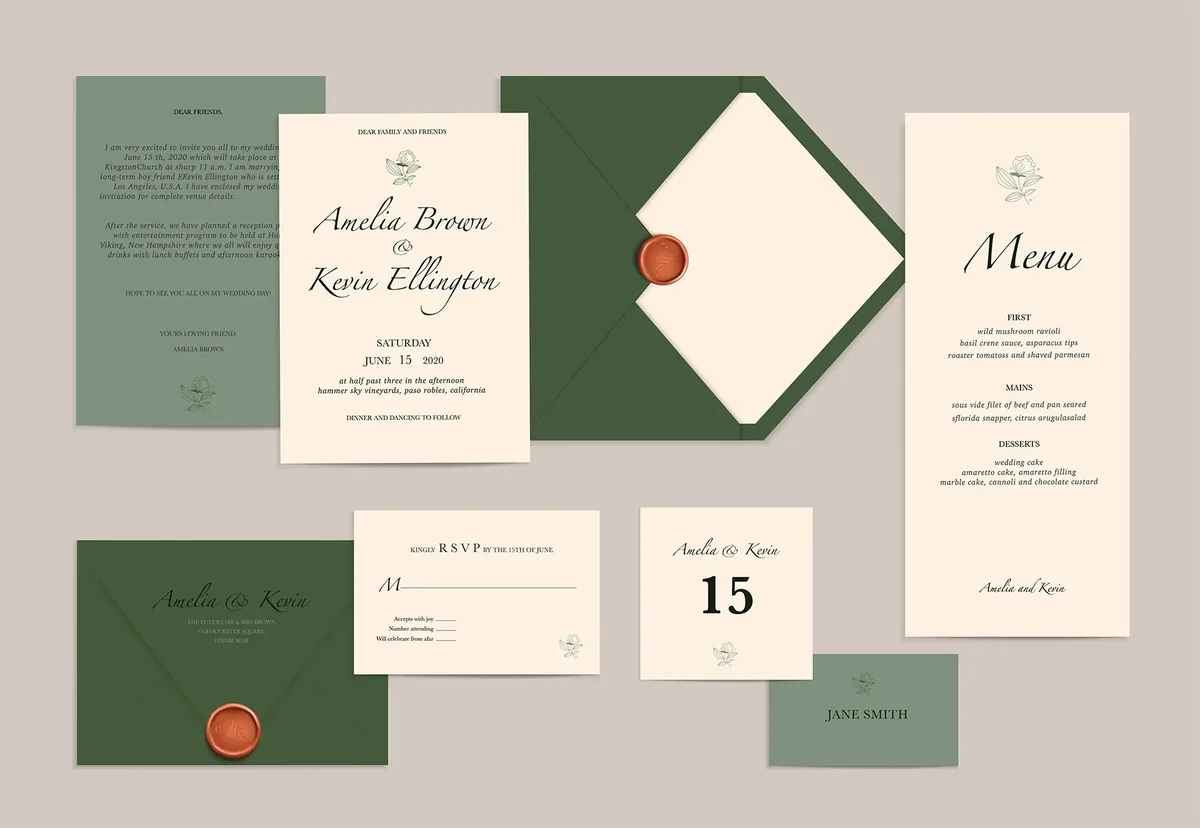
Most couples order more than the invitation itself. In rough order of when they are needed:
- Save the dates, often a simple postcard on the same stock family
- The invitation card
- Details or reception card, on a lighter weight than the main card
- RSVP card and its reply envelope
- Outer envelope, and an inner envelope if you want the traditional two
- Menus, programs, place cards and table numbers
- Thank you cards, which can be printed at the same time and held back
Printing the whole suite in one run costs less than adding pieces later, because the setup is shared. If your guest list is not final, the invitations can be printed first and the day-of pieces closer to the date.
For envelopes, use the same fiber family as the invitation so the suite looks consistent. A lighter cotton or linen wove takes address printing cleanly, and an unbleached natural envelope pairs well with kraft. If you would like the addresses printed rather than handwritten, ask about address printing when you request a quote.
Digital invitations
A digital invitation uses no paper and no postage. For a small wedding, a destination wedding or a last-minute change of plans, it is often the right choice, and we will tell you so. Most couples want paper for the invitation itself and use digital messages for updates and reminders. That combination reduces the print run to the most important pieces while still giving your guests an invitation they can keep on the refrigerator.
Ordering, samples and timing
Paper is hard to judge on a screen. You can read about our stocks on the paper samples page. Ask about paper samples when you request a quote, and compare your shortlist against your wedding colors before you decide. This is the best way to avoid surprises.
Typical turnaround is one to two weeks from artwork approval. Allow additional time before that for proofing and for any foil or embossing dies. Minimums vary by product and are listed on each product page. Short runs are possible, so a wedding with fifty guests is not a problem.
We do not have a retail counter. We quote by email, are based in Ponte Vedra Beach, Florida, and ship anywhere in the country. If you have a designer, send us their files. If you do not, send us a description of what you have in mind and we can discuss the options.
Non-wedding invitations
The same stocks and inks work for showers, birthdays, anniversaries, charity dinners and corporate events. Only the wording and the quantity change. Our greeting cards page covers the smaller formats, and the full range is on products. For more ideas, see our wedding and celebration printing page.
Ready to start
Tell us your quantity, your date and the look you want, and we will reply with paper options and a price. Start your order when you are ready.
Products mentioned in this piece
Everything below prints on recycled, FSC-certified stock with soy-based inks. Ask for a quote on any of it.

Printing something like this?
Thirty-six years of sourcing recycled stock, put to work on your job. Tell us what you need and Greg will come back with stock options, a price and a date.