Eco friendly photo printing and art prints
Photographic and art prints on 100 percent recycled, FSC certified paper with soy based inks. How recycled stock changes tone, black point and detail, and how to prepare files for it.
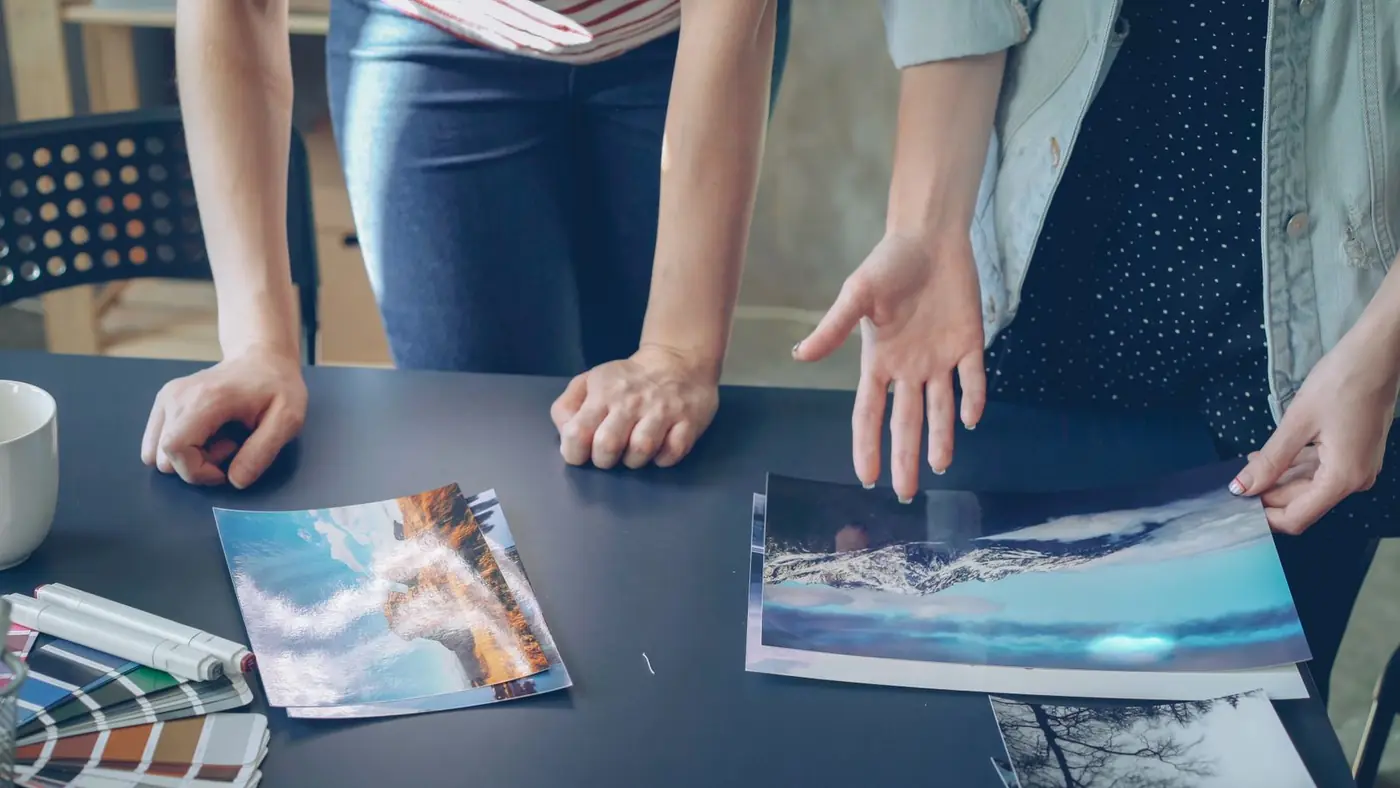
Eco friendly photo printing means printing your images on post consumer recycled, FSC certified paper with soy or vegetable based inks, on stock bleached without chlorine, in the quantity you will actually use. One thing to know is that recycled uncoated paper renders a photograph differently from glossy virgin photo stock. The result is warmer, softer and more matte, and knowing this in advance lets you prepare your images for it.
We print photographic and art prints, photo postcards, notecards and photo books this way. Eco Friendly Printer has been family run since Greg Barber founded it in Northport, New York in 1990. The business is now based in Ponte Vedra Beach, Florida. There is no storefront and no kiosk. We quote a job, print it, and ship it anywhere in the country, usually within one to two weeks of artwork approval.
How recycled paper renders a photograph
Four things change compared with a resin coated glossy sheet from a consumer lab.
- The white point is warmer. Recycled stock is not optically brightened to a blue white, so the paper base reads slightly cream. This suits skin tones and warm light. Cool blue and high key white images lose a little contrast.
- Blacks are softer. An uncoated sheet absorbs more ink and scatters more light, so the deepest black sits a step lighter than it does on gloss. Images that depend on a hard black point need the contrast lifted slightly before printing.
- Fine detail spreads a little. Ink wicks into the fiber, so very fine texture and very small type soften. Grain and film texture look better for the same reason.
- There is no glare. A matte recycled print is readable from any angle and under any lamp, which is a practical advantage for prints on display.
The best way to judge this is to see it. Ask about paper samples when you request a quote, then hold the two or three stocks you are considering under the light the print will hang in before you decide. You can read about each stock on our paper samples page. We work with stock from mills including Sustana EnviroPrint, Monadnock Astrolite PC 100, Neenah Environment and Mohawk Loop, all recycled, FSC certified and chlorine free bleached.
The ink
Soy and vegetable based inks replace the petroleum carrier with soybean, linseed or similar oils. They release fewer volatile organic compounds as they set and they lift off the fiber more easily when the paper is recycled, so the print stays in the paper stream at the end of its life. On photographic work they hold color well, and on uncoated recycled sheets they generally look cleaner than petroleum inks, which tend to go muddy in the shadows.
Preparing files so the print matches what you saw
Most disappointing prints are caused by the file rather than the paper. The following five steps prevent most problems.
- Send the largest file you have. Do not send the version you posted online or a screenshot of it. Resolution you do not have cannot be added later.
- Lift the brightness slightly. A screen is backlit and paper is not. Images almost always print a shade darker than they look on a monitor, and more so on uncoated recycled stock.
- Crop before you send. Deciding the composition yourself means the resolution goes where the subject is, and it means nobody at our end is guessing which edge to trim.
- Check the shadows. Detail that is nearly black on screen will be solid black on paper. Open it up a little if it matters.
- Say what the print is for. A print for a frame, a print for a book page and a print for a postcard rack need different treatment, and we would rather know before we set it up.
Eco friendly art prints for artists and small editions
Artists printing their own work usually choose between recycled and cotton papers. Recycled stock made from post-consumer fiber has a warm white base and an even surface that suits illustration, line work and photographs with natural tones. Cotton papers are often chosen for fine art editions because of their weight and soft feel, and many are made from cotton linters, a byproduct of the textile industry, rather than wood pulp. If you are considering a cotton sheet, mention it when you request a quote and we will tell you what suits the job.
The surface of the paper changes how a print looks. A matte, uncoated surface has no glare and gives a soft finish that suits watercolor, drawing and textured work. A smoother sheet holds fine detail and sharp edges, which helps with detailed illustration and photography. Because colors on recycled and uncoated paper look warmer than they do on a screen, ask about a printed proof on your chosen stock before you approve a full edition.
Art prints run on the same materials with two extra decisions. The first is trim size. Sticking to a size that fits a standard frame saves your buyer money and saves paper on the press sheet, because odd trims leave more offcut. The second is quantity. Digital printing makes a run of fifty practical, so there is no need to print five hundred and store four hundred of them. Print an edition you expect to sell, then reprint when needed. Small editions also work well as easel back prints for display on a desk, table or shelf, and as greeting cards that give buyers a smaller version of the work at a lower price.
If the work is going out under your own name, ask us about the stock before the artwork is final. An illustration built from flat color and heavy ink coverage behaves very differently on a textured recycled sheet than a photograph does, and it is easier to adjust artwork than to work against the paper.
Photo books, cards and postcards
Loose prints are not the only way to keep photographs. A short run photo book on recycled stock keeps a body of work together and, page for page, uses less material than framing everything. Photo postcards and notecards are the least expensive way to put an image in someone's hands, and they suit photographers selling at markets or shipping something with an order. Specs and options for those are on postcards, and our full range is at products.
The parts people forget
A print packed in a plastic sleeve inside a plastic mailer defeats much of the purpose of printing on recycled paper. Paper interleaving, a rigid board and a paper mailer will protect a print well. Say what you need at the quoting stage and we will keep the packaging in the same material stream as the print.
Lamination is the other common issue. A gloss film over a print makes it shiny and makes it unrecyclable, because the plastic cannot practically be separated from the fiber afterwards. If the print needs protection, glass in a frame does the job and comes off cleanly at the end.
What to send for a quote
Send us the image dimensions, the finished print size, the quantity, and whether you need packaging for shipping or resale. If you are choosing between stocks, ask about paper samples when you request a quote. If you want to talk it through, book a print consultation and we will work through the options with you.
When you are ready, start your order and we will come back with a quote and a paper recommendation for your images.
Products mentioned in this piece
Everything below prints on recycled, FSC-certified stock with soy-based inks. Ask for a quote on any of it.

Printing something like this?
Thirty-six years of sourcing recycled stock, put to work on your job. Tell us what you need and Greg will come back with stock options, a price and a date.