What is offset printing? How it works and when to use it
Offset printing is the standard process for larger print runs. This guide explains how plates, blankets and inks work together, the difference between sheetfed and web offset, and when to choose offset.
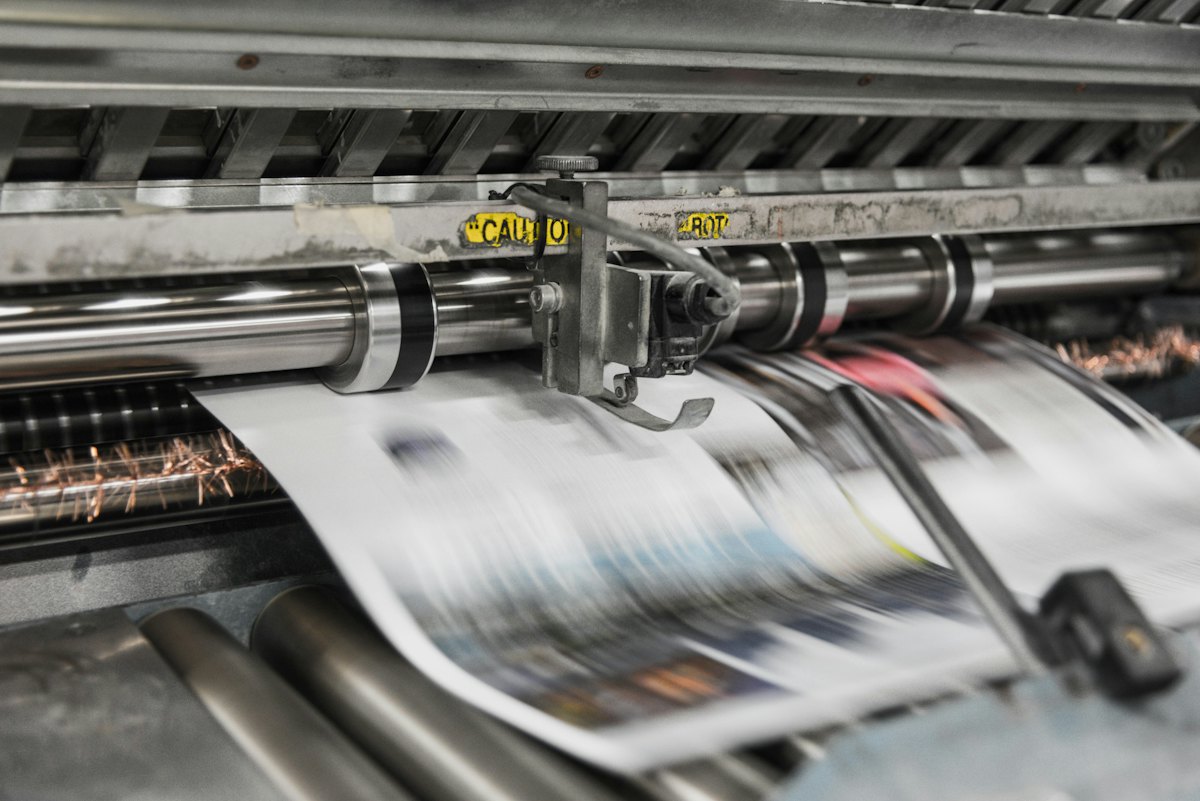
Offset printing, also called offset lithography, is the most widely used process for commercial printing in larger quantities. Brochures, catalogs, magazines, books, letterhead and packaging are often printed offset.
This guide explains how offset printing works, the main types of offset press and when offset is a better choice than digital printing.
How offset printing works
Offset printing is based on a simple fact: oil and water do not mix. The image is put on a thin metal plate. The image areas on the plate attract ink, and the non-image areas attract water.
- The plate is wrapped around a cylinder on the press.
- Rollers dampen the plate with water and then apply ink. The ink sticks only to the image areas.
- The inked image is transferred, or offset, from the plate to a rubber blanket on a second cylinder.
- The blanket presses the image onto the paper.
The rubber blanket is the reason for the name. Because the plate never touches the paper, it lasts through long runs, and the soft blanket presses ink evenly into textured and uncoated papers.
Four-color process and spot colors
Full-color offset printing uses four plates, one each for cyan, magenta, yellow and black (CMYK). Each color is printed in turn, and tiny dots of the four inks combine to make photographs and full-color artwork.
Offset presses can also print spot colors, which are inks mixed to an exact color before printing, such as a Pantone brand color. A spot color needs its own plate. Our guide to Pantone color matching explains when a spot color is worth it.
Sheetfed and web offset
- Sheetfed offset prints on individual sheets of paper. It is used for brochures, business cards, postcards, posters, book covers and most commercial work, and it handles a wide range of paper weights and finishes.
- Web offset prints on a continuous roll of paper that is cut and folded after printing. It is built for very long runs, such as newspapers, catalogs and high-volume magazines.
Setup and cost
Before an offset job runs, plates are made, the inks are loaded and the press is adjusted with test sheets until color and position are right. This setup is called make-ready. It is a fixed cost, so the price per piece drops as the quantity rises.
For small quantities, digital printing is usually less expensive because it has little setup. As the quantity grows, offset becomes the more economical choice. The point where offset becomes less expensive depends on the size of the piece, the number of colors and the paper, so ask for both prices when the quantity is in between.
When to choose offset printing
- The run is large, such as thousands of brochures, menus or catalogs.
- A brand color has to match a Pantone number exactly.
- The paper is heavy, textured, uncoated or larger than a digital press can take.
- The piece needs consistent color across a long run or a reprint.
Digital printing is usually the better fit for short runs, quick schedules and pieces where each copy is personalized. Our guide to digital vs offset printing compares the two side by side.
Offset printing and the environment
Offset printing produces some waste during make-ready, but the cost per piece and the waste per piece are both low on longer runs. Aluminum printing plates are widely recycled after use. Our offset work runs on soy-based inks, which come off the paper fiber easily when the paper is recycled. Our guide to soy based ink printing covers how soy inks print.
The most effective way to reduce waste on an offset job is to order the quantity you will actually use and to choose recycled paper. The paper usually has a larger effect than the press.
Common questions
What is offset printing?
Offset printing is a process where ink is transferred from a metal plate to a rubber blanket and then onto paper. It is the standard method for larger commercial print runs.
Why is it called offset printing?
The image is offset from the plate to a rubber blanket before it reaches the paper, instead of the plate printing directly on the paper.
Is offset printing better than digital printing?
Neither is better for every job. Offset has a lower cost per piece on large runs and prints exact spot colors. Digital is usually less expensive and faster for short runs.
What is offset paper?
Offset paper is an uncoated paper made for offset presses, often used for letterhead, books and forms. Many recycled offset papers are available.
Products mentioned in this piece
Everything below prints on recycled, FSC-certified stock with soy-based inks. Ask for a quote on any of it.



Printing something like this?
Thirty-six years of sourcing recycled stock, put to work on your job. Tell us what you need and Greg will come back with stock options, a price and a date.