Eco-friendly save the dates: paper, formats and timing
Eco-friendly save the dates use recycled or plantable paper, a material-saving format and the right quantity. This guide covers paper, digital options, timing and wording.
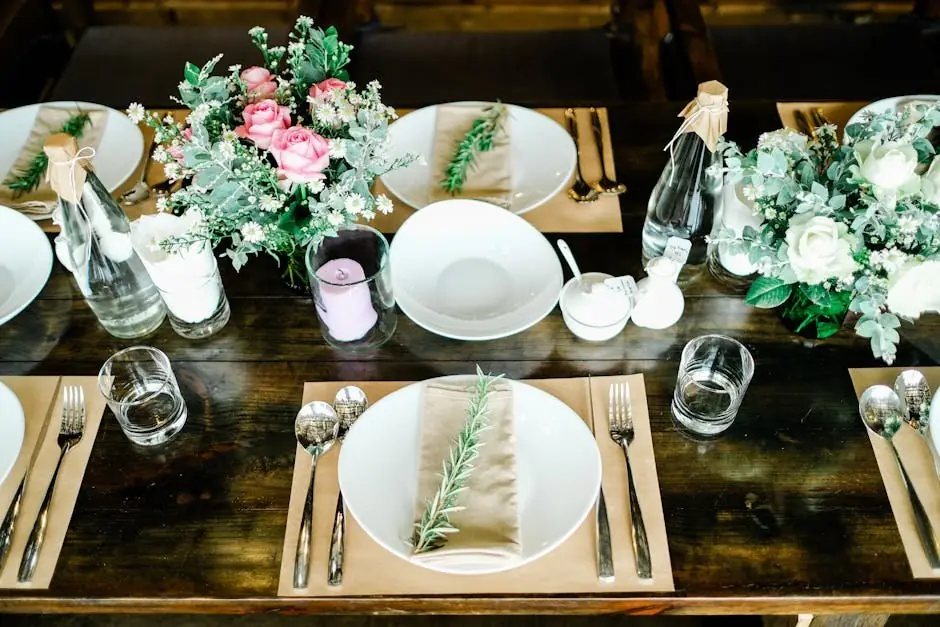
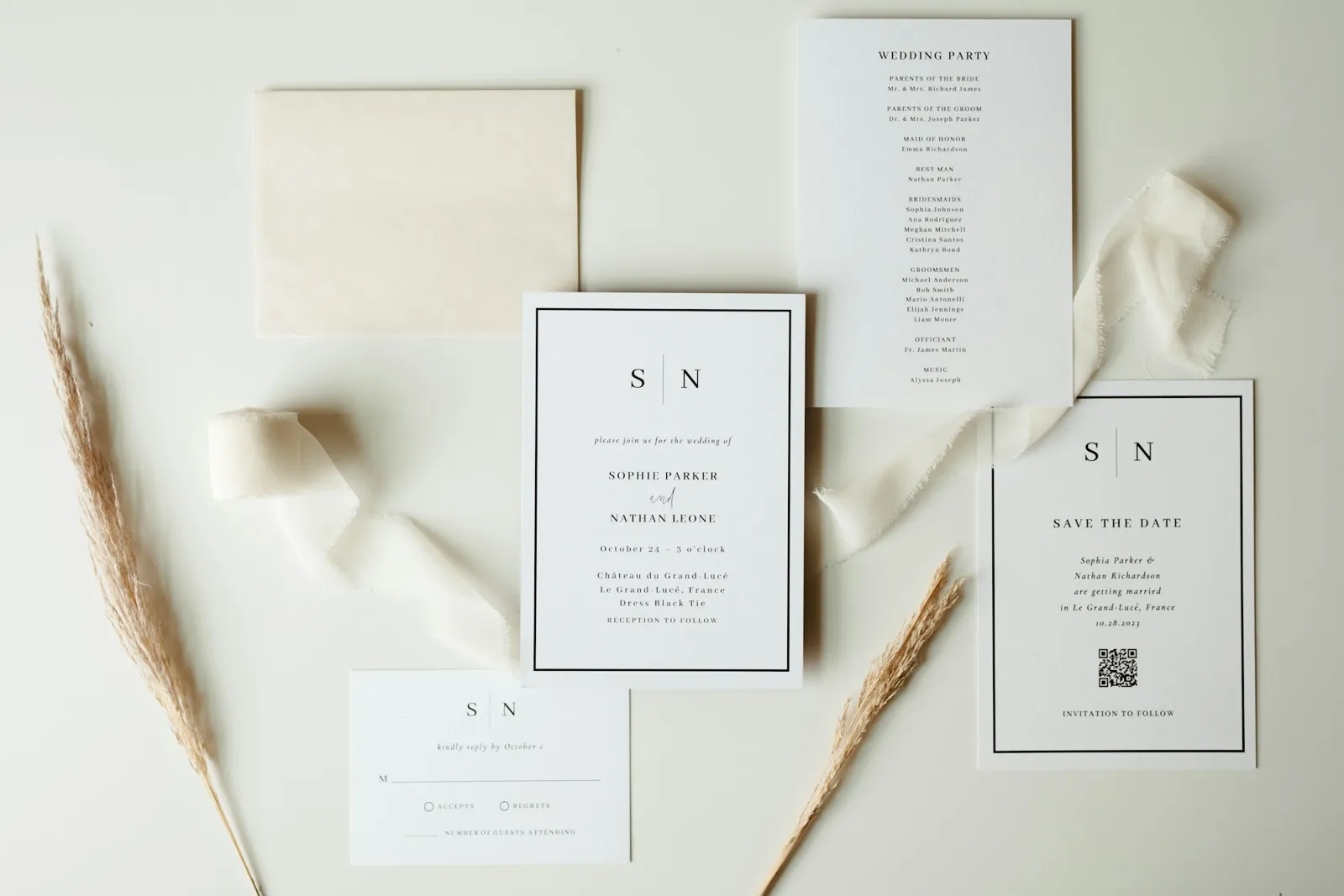
An eco-friendly save the date is printed on recycled or plantable paper, in the quantity you need, in a format that uses as little material as possible. Many couples send one card per household, choose a postcard so no envelope is needed, and print on post-consumer recycled stock with soy-based inks. Others skip paper and send a digital save the date. This guide covers each option and how to choose.
Print fewer cards
The simplest way to reduce waste is to print the right number. Save the dates go to households, not individual guests, so a couple or family living together needs one card. Count addresses rather than names, then add 5 to 10 extras for keepsakes and late additions to the list.
Choose a format that uses less material
- Postcards need no envelope. A 4 x 6 inch card mails at the USPS postcard rate, so it saves paper and postage.
- Flat cards with envelopes, usually 5 x 7 inches in an A7 envelope, match most invitation suites and protect the card in the mail.
- Small cards, such as A2 (4.25 x 5.5 inches), use less paper and still fit a standard envelope.
- Magnets and other add-ons are popular, but they are hard to recycle. A printed card that guests keep on the fridge does the same job.
Our save the date size guide lists each size with its envelope and the mailing rules.
Paper options
Recycled card stock
Recycled cover stock with a high share of post-consumer waste is the most practical choice. It comes in white, natural and colored shades, in smooth, felt and linen finishes, and prints photographs and text cleanly. A 100 lb to 130 lb cover gives the card a sturdy feel, and an uncoated finish keeps it easy to recycle.
Plantable seed paper
Seed paper is made from recycled paper pulp with wildflower seeds pressed into the sheet. Guests can soak the card, plant it and grow flowers. Because the surface is soft and textured, it suits bold, simple designs with one or two colors rather than detailed photos. For a photo save the date, a small seed paper piece can be attached to a recycled card.
Cotton paper
Cotton paper is made from cotton fiber instead of wood pulp. It is thick, soft and well suited to letterpress, and many couples use it to match a formal invitation suite.
Ink and finishes
Soy and vegetable-based inks are the usual choice for eco-friendly stationery. Uncoated and matte finishes keep the card recyclable. Letterpress and foil add a premium look; foil in small areas does not usually stop a card from being recycled, but plastic lamination and glitter do.
Digital save the dates
A digital save the date sent by email or text uses no paper and costs little. It works well when most guests are comfortable online or when you are planning on a short timeline. Some couples send digital save the dates and a printed invitation, which keeps the formal piece on paper while cutting the total amount printed. Older relatives often appreciate a printed card, so a mix of digital and printed is also common.
When to send them
Send save the dates six to eight months before the wedding. For destination weddings and holiday weekends, eight to twelve months gives guests time to arrange travel. The formal invitation follows about six to eight weeks before the date.
What to include
- Your names
- The date
- The city and state, or the venue if it is confirmed
- Your wedding website, if you have one
- A note that a formal invitation will follow
A wedding website reduces how much needs to be printed later, because travel details, hotel blocks and registry information can live online instead of on extra cards.
Matching the rest of the suite
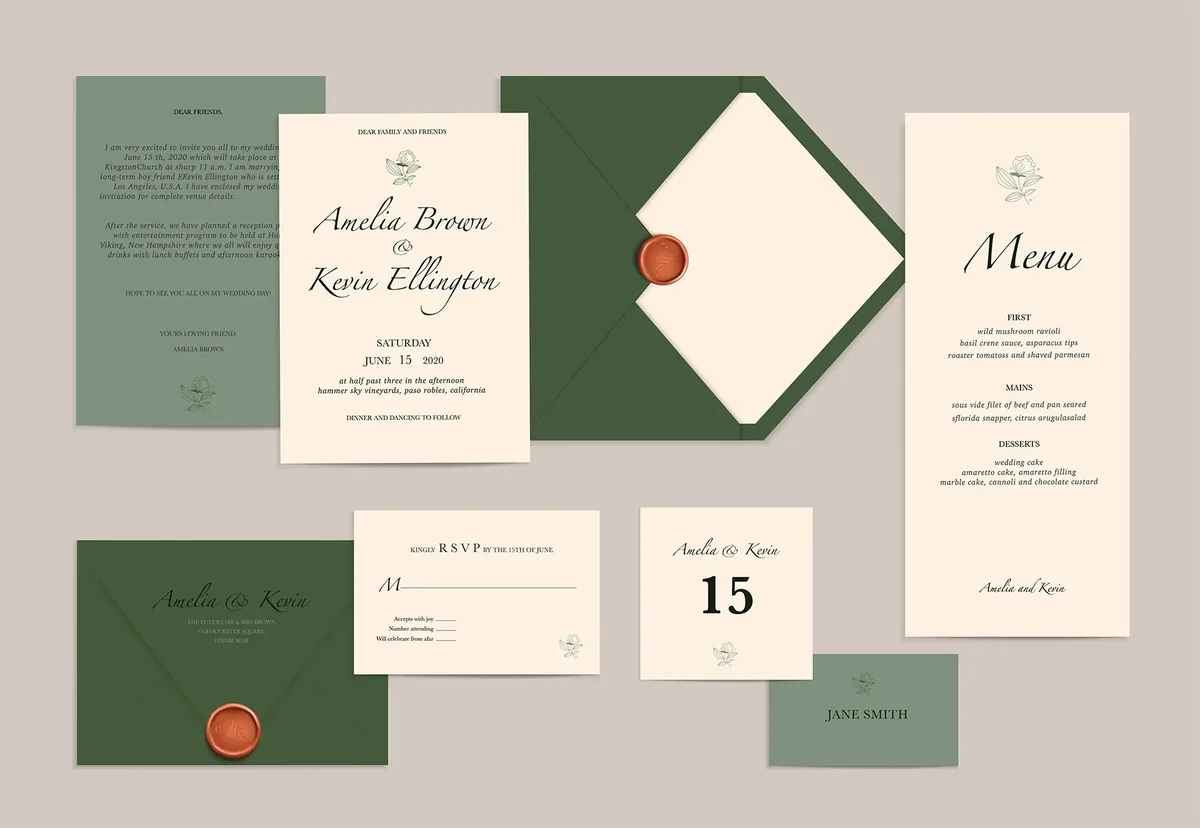
Using the same paper and design for the save the dates, invitations and thank you cards keeps the stationery consistent and makes ordering simpler. See our wedding invitations, our guide to eco-friendly wedding invitations and our guide to wedding thank you cards.
Common questions
What makes a save the date eco-friendly?
Recycled or plantable paper, soy or vegetable-based inks, a recyclable finish, and a sensible quantity, such as one card per household.
Are seed paper save the dates a good idea?
Yes, for simple, bold designs. Seed paper has a textured surface, so detailed photos print better on recycled card stock with a small seed paper piece attached.
Should save the dates be digital or printed?
Digital saves paper and cost. Printed cards are easier for some guests and make a nice keepsake. Many couples use a mix of both.
How many save the dates do I need?
One per household, plus 5 to 10 extras.
Products mentioned in this piece
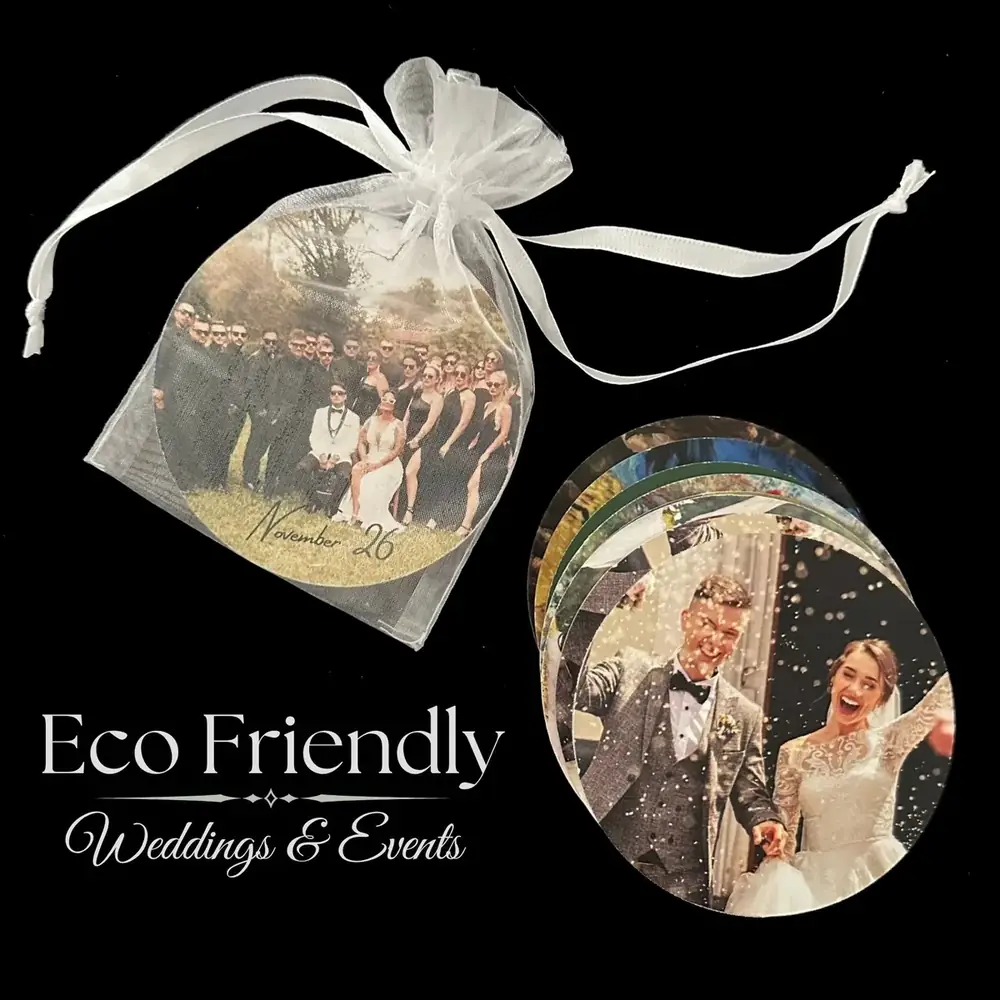
Everything below prints on recycled, FSC-certified stock with soy-based inks. Ask for a quote on any of it.
Printing something like this?
Thirty-six years of sourcing recycled stock, put to work on your job. Tell us what you need and Greg will come back with stock options, a price and a date.