Business card size: standard dimensions and print specs
Standard business card size is 3.5 x 2 inches in the US. Here are sizes by country, bleed and safe area, pixel dimensions and card thickness.
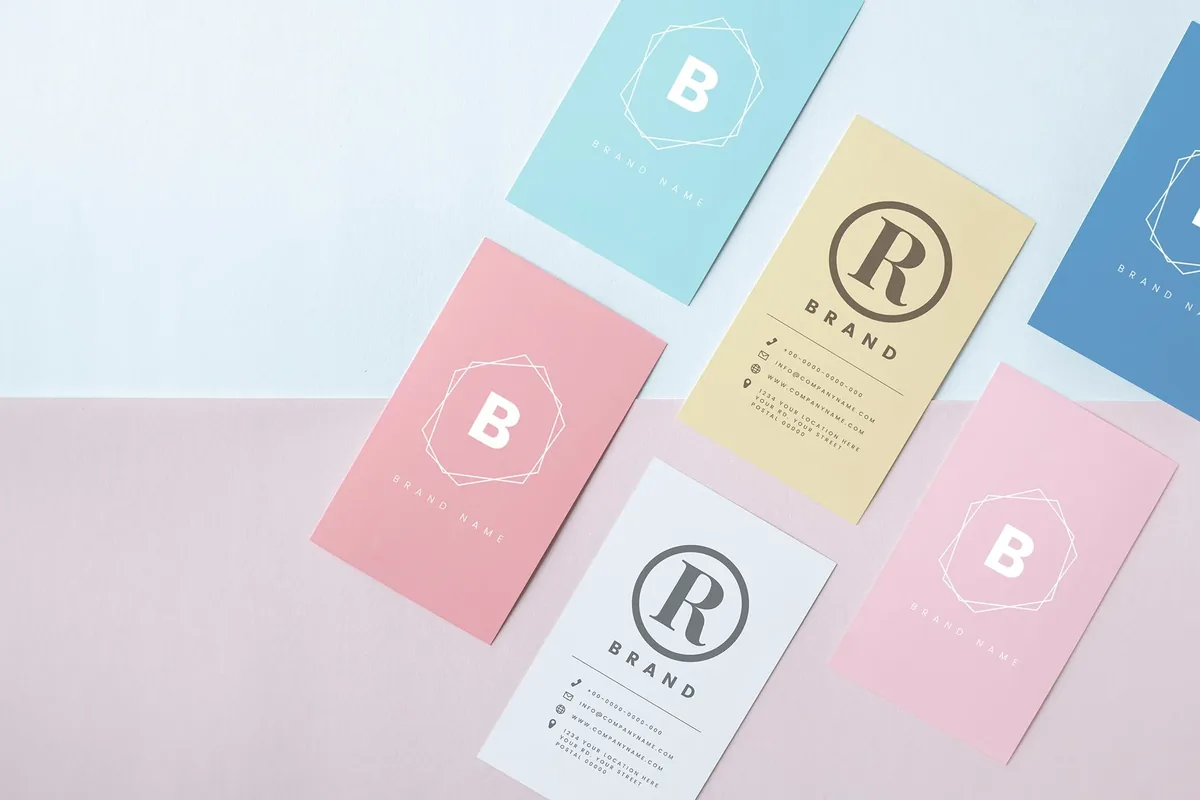
The standard business card size in the United States and Canada is 3.5 x 2 inches (88.9 x 50.8 mm). Most card holders, wallets and card scanners are made for that size. For printing, the file is set up slightly larger, with bleed, and the important text stays inside a safe area.
If you are ready to order, see our eco friendly business cards on recycled and cotton paper.
Business card dimensions at a glance
- Trim size: 3.5 x 2 in (88.9 x 50.8 mm). This is the finished card.
- With bleed: 3.75 x 2.25 in, which adds 0.125 in on every edge.
- Safe area: 3.25 x 1.75 in. Keep text and logos inside it.
- Pixels at 300 ppi: 1050 x 600 px at trim size, or 1125 x 675 px with bleed.
Business card sizes by country
- United States and Canada: 3.5 x 2 in (88.9 x 50.8 mm)
- United Kingdom and most of Europe: 85 x 55 mm
- Australia and New Zealand: 90 x 55 mm
- Japan: 91 x 55 mm
- China: 90 x 54 mm
- Credit card size (ISO ID-1): 85.6 x 53.98 mm, used for plastic and wallet cards
If you hand out cards in more than one country, the US size is a safe choice for North America and fits most European card holders.
Other shapes and sizes
- Rounded corners: the standard 3.5 x 2 in card with the corners cut to a curve. The file setup is the same.
- Square cards: commonly 2 x 2 in. They stand out, but they do not fit every card holder.
- Slim cards: the same 3.5 in length with a shorter height, for a narrow, modern look.
- Folded cards: printed flat at 3.5 x 4 in and folded to 3.5 x 2 in, which gives four panels for services, a map or an appointment reminder.
- Die-cut shapes: circles and custom outlines cut with a steel rule die.
How to set up a business card file
- Build the document at 3.5 x 2 in and add 0.125 in of bleed on every side.
- Keep text and logos at least 0.125 in inside the trim line.
- Use images at 300 ppi at final size, and convert colors to CMYK or specify Pantone numbers.
- Avoid very thin type, especially on uncoated and textured papers, where fine lines can fill in.
- Export a press-ready PDF with fonts embedded and crop marks on.
Our guide to print-ready files covers bleed, resolution and export settings in more detail, and our Pantone color matching guide explains how to keep a brand color consistent.
How thick should a business card be?
Card thickness is measured in points, where one point is one thousandth of an inch. A 14pt card is a standard card. 16pt and 18pt cards feel noticeably sturdier. A 32pt duplex card, made from two sheets pressed together, feels substantial and can take a painted edge. Cotton cards are often specified by weight, such as 110lb cover, and take letterpress well. Our paper weight guide explains points, pounds and gsm, and our cotton paper and kraft paper pages describe two popular alternatives to white stock.
Choosing a size that saves paper
Standard 3.5 x 2 in cards fit efficiently on a press sheet, so they leave the least waste and usually cost the least per card. Custom sizes and die-cut shapes leave more trim, and die-cut shapes need a cutting die, so they usually cost more. If you want a card that stands out without extra cost, a heavier stock or a cotton sheet at the standard size is often the better choice.
Common questions
What is the standard business card size?
3.5 x 2 inches in the United States and Canada, and 85 x 55 mm in the UK and most of Europe.
What size should a business card file be?
3.75 x 2.25 inches including 0.125 inch bleed on each side, which is 1125 x 675 pixels at 300 ppi.
What is the business card size in pixels?
1050 x 600 pixels at 300 ppi for the trimmed card.
Are business cards the same size as credit cards?
No. A credit card is 85.6 x 53.98 mm (about 3.37 x 2.125 in), slightly narrower and taller than a US business card.
To price cards on recycled, cotton or kraft paper, request a quote with your quantity and artwork.
Products mentioned in this piece
Everything below prints on recycled, FSC-certified stock with soy-based inks. Ask for a quote on any of it.
Printing something like this?
Thirty-six years of sourcing recycled stock, put to work on your job. Tell us what you need and Greg will come back with stock options, a price and a date.