Each one suits different jobs, so the answer depends on what you are printing.
Soy and vegetable inks are made from a renewable crop rather than petroleum, release far fewer volatile organic compounds, and, importantly, they de-ink more cleanly at the recycling mill, so the paper they were printed on comes back as better recycled fiber.
Non-toxic toners avoid solvents too, and they suit very short digital runs where the setup cost of an offset job is not worthwhile. For most of our offset work, soy ink is the better choice. For a run of fifty pieces, digital toner may be the better choice. We will recommend the option that suits your job.
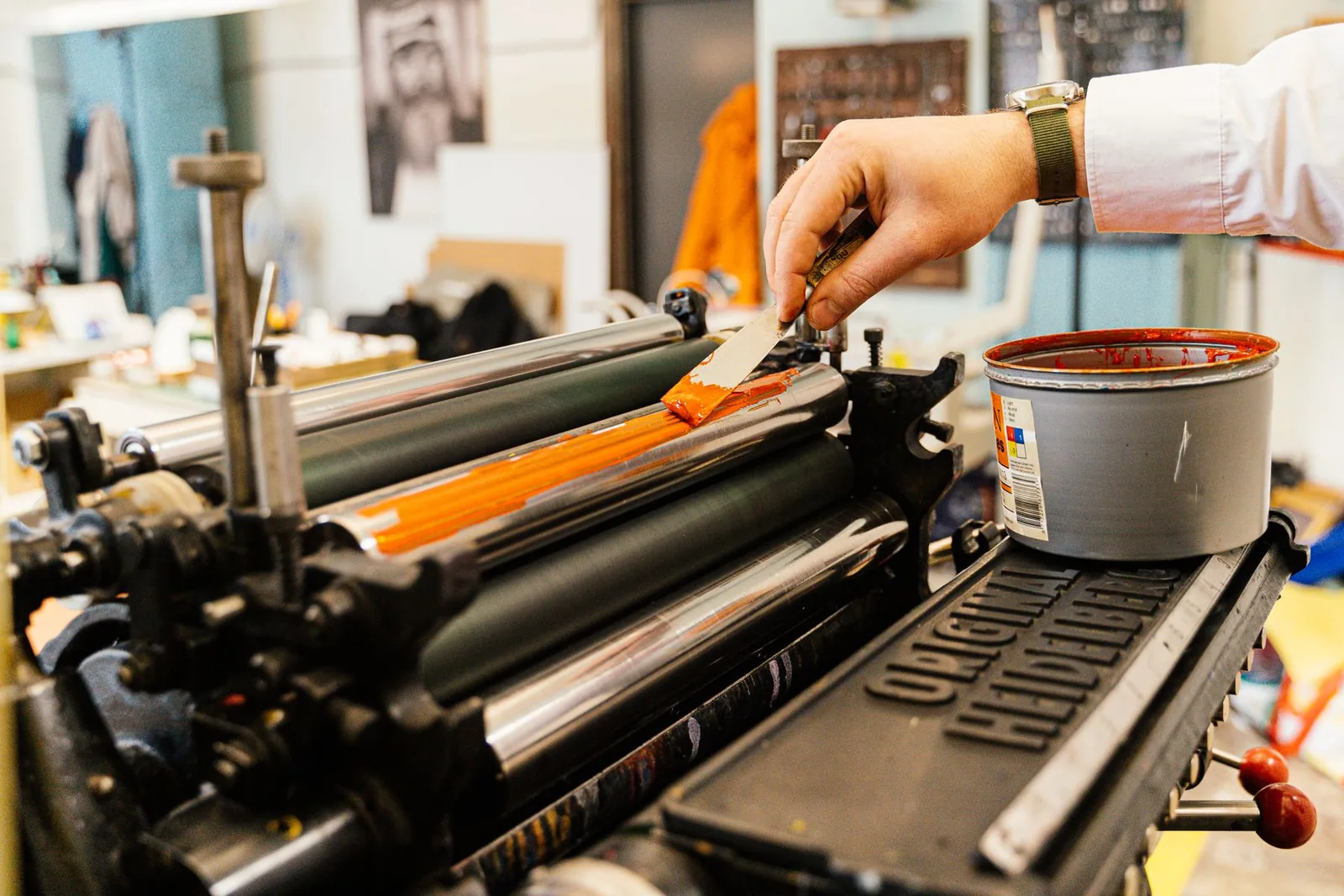
The choice usually follows the printing method. Soy and vegetable inks are used on offset presses, which transfer ink from plates to the paper and are efficient for larger quantities. Toner is used in digital printing, which needs no plates and very little make-ready, so less paper is used getting the press ready on a short run. Our articles on offset printing and digital vs offset printing explain the two methods.
For most jobs, the paper has a bigger effect on the footprint than the choice between ink and toner. A run printed on recycled stock with either method is a better result than a run on virgin paper with the greenest ink available. Our guide to recycled paper printing covers how to choose a recycled sheet.
You can read more about how soy ink behaves on press in our article on soy based ink printing.
Get a quote for your project
Tell us what you are printing and we will follow up with paper options and a quote. There is no online cart, and pricing is based on your quantity and specifications.