Eco friendly greeting cards on recycled paper
We print greeting cards, birthday cards and holiday cards on 100 percent recycled, FSC-certified stock with soy-based inks. This guide covers what to specify and which finish to avoid.

An eco friendly greeting card is one printed on post-consumer recycled, FSC-certified card stock with soy-based inks, bleached without chlorine, and finished so it can go straight into a recycling bin when the recipient is done with it. The finish is where many cards sold as green fall short. A glossy plastic laminate makes a card unrecyclable, no matter what paper is underneath it.
We print custom eco friendly greeting cards, birthday cards, holiday cards, thank you cards and notecards on 100 percent recycled stock. Eco Friendly Printer has been family run since Greg Barber founded it in Northport, New York in 1990. The business is now based in Ponte Vedra Beach, Florida. We quote and ship nationwide, and turnaround is usually one to two weeks from artwork approval.
What actually makes the card eco friendly
Four specifications cover almost everything.
- Post-consumer recycled content. This is paper that was used, collected and pulped again. Pre-consumer content is mill trim that never reached anyone. It is worth having, but it is not the same thing, so ask for the post-consumer percentage.
- FSC certification. Any virgin fiber in the sheet came from a responsibly managed forest, and the chain of custody was tracked to the mill.
- Soy or vegetable-based ink. The petroleum carrier is replaced with soybean or similar oils. This releases fewer volatile organic compounds as the ink sets, and the ink lifts off the fiber more easily when the card is recycled.
- Chlorine-free bleaching. Oxygen-based compounds are used instead of chlorine, which keeps chlorine byproducts out of the mill's wastewater.
We print on stock from mills including Sustana EnviroPrint, Monadnock Astrolite PC 100, Neenah Environment and Mohawk Loop. All of it is recycled, FSC-certified and bleached without chlorine, so the four points above are covered before you choose a design.
Card stock, and what recycled paper looks like
Recycled card stock is no longer the gray, fibrous paper it once was. It prints cleanly and holds fine detail. It does have a slightly warmer shade than bleached virgin paper and, on some grades, a visible fleck. Most people see that as character. If you want the card to look bright white, let us know and we will choose a stock that achieves it.
Three finishes cover most greeting card work:
- Uncoated smooth. This is the standard choice. It handles color well, and it is the only finish you can reliably write on with a ballpoint or fountain pen, which matters for a card someone is going to sign.
- Textured or felt. This finish is more tactile and works well for letterpress-style designs and for cards meant to feel like stationery rather than a retail product.
- Kraft. Kraft is an unbleached brown stock that is durable and makes light ink colors stand out. It suits rustic and hand-drawn designs.
Weight matters as much as finish. A card that falls over when it is stood on a mantel looks inexpensive regardless of the printing. For a folded card, choose a cover weight rather than a text weight.
It is difficult to judge paper on a screen. You can read about our stocks on our samples page. Ask about paper samples when you request a quote, and compare two or three before you decide.
The finish is where cards go wrong
Gloss lamination is a thin plastic film. It makes a card shiny, and it also makes the card non-recyclable, because the film has to be separated from the fiber and in practice it is not. Cards with glitter or foil have the same problem for the same reason.
If you want some sheen, there are better options. Choose an uncoated stock with a smooth surface and let good ink coverage do the work, or use a spot treatment on a small area rather than coating the whole card. Tell us when you request a quote that the finished card needs to be recyclable, and we will specify it accordingly.
Envelopes
An envelope made from virgin paper undoes much of the benefit of a recycled card. Recycled kraft and recycled white envelopes are readily available in standard greeting card sizes, and we quote them alongside the cards so the set matches. Our guide to recycled envelopes covers envelope options in more detail. There are two details to decide: whether you want the envelope blank or printed with a return address, and whether you need a liner, which adds material and can usually be left out.
Seed paper and plantable cards
Plantable cards are made from paper with flower, herb or vegetable seeds embedded in the pulp. The recipient plants the card instead of throwing it away. It is a nice idea, and it is also a specialty material with real limitations. Seed paper is thick, textured and absorbent, so fine type and heavy ink coverage do not print well on it, and the seeds have a limited shelf life. If you are considering seed paper, talk to us before the design is finished so the artwork suits the stock.
Sizes, folds and quantities
Most greeting cards are folded cards in a standard envelope size, either scored down the middle of a long sheet or folded on the short edge. Flat notecards are the other common format and use less paper per card. Standard sizes keep trim waste down and make envelopes easy to source, which is why custom sizes cost more.
For quantity, print what you will send. A short run that you actually mail is better than a box of two hundred cards that sits unused in a drawer. Short runs are possible, and minimums vary by product and are listed on each product page.
Recycled holiday and Christmas cards
For many businesses, holiday cards are the biggest card order of the year. They go out to a mailing list, they carry a logo, and they are read by the clients and partners who matter most to the business. If sustainability is part of how your company presents itself, a holiday card printed on recycled stock with soy ink and no plastic film supports that message.
Recycled Christmas cards use the same materials as any other card. A smooth uncoated cover stock works for most designs and is easy to sign. Kraft suits rustic or hand-drawn artwork. If you want metallic color, ask about a spot treatment on a small area instead of foil over the whole card, so the card stays recyclable.
Plan holiday cards early. December is the busiest time of year for holiday card orders, and printed envelopes, signing and mailing all take time after the cards are printed. Our small business printing page has more on printing for companies.
Birthday and thank you cards on recycled paper
Birthday cards are the most common one-off run we quote. They are usually a single design in a modest quantity, often for a family or for a small shop that gives them to customers. Thank you cards follow the same pattern and are often printed as flat notecards, which use less paper per card than a folded design.
Recycled cards for these occasions do not need special stock. The same post-consumer recycled card stock, soy inks and recyclable finishes apply, so the choice comes down to the design, the size and whether you want matching envelopes.
Common questions about eco friendly greeting cards
What makes a greeting card recyclable
A card is recyclable when the paper is uncoated or lightly coated and the card has no plastic laminate, glitter or full foil coverage. Soy-based inks also come off the fiber more easily at the recycling mill.
Whether recycled card stock is thick enough for a folded card
Yes. Recycled card stock comes in cover weights that stand up on a shelf and hold a clean fold. We recommend a cover weight for any folded card.
Matching envelopes
Recycled white and kraft envelopes are available in standard greeting card sizes, and we quote them with the cards.
Getting a quote
Send us the size, the fold, the quantity, whether you need envelopes, and whether the design is print-ready or still in progress. If you are unsure about stock, ask about paper samples when you request a quote. You can see specifications and options on greeting cards, and our full range is on products.
When you are ready to print, start your order and we will reply with a quote and a stock recommendation.
Products mentioned in this piece
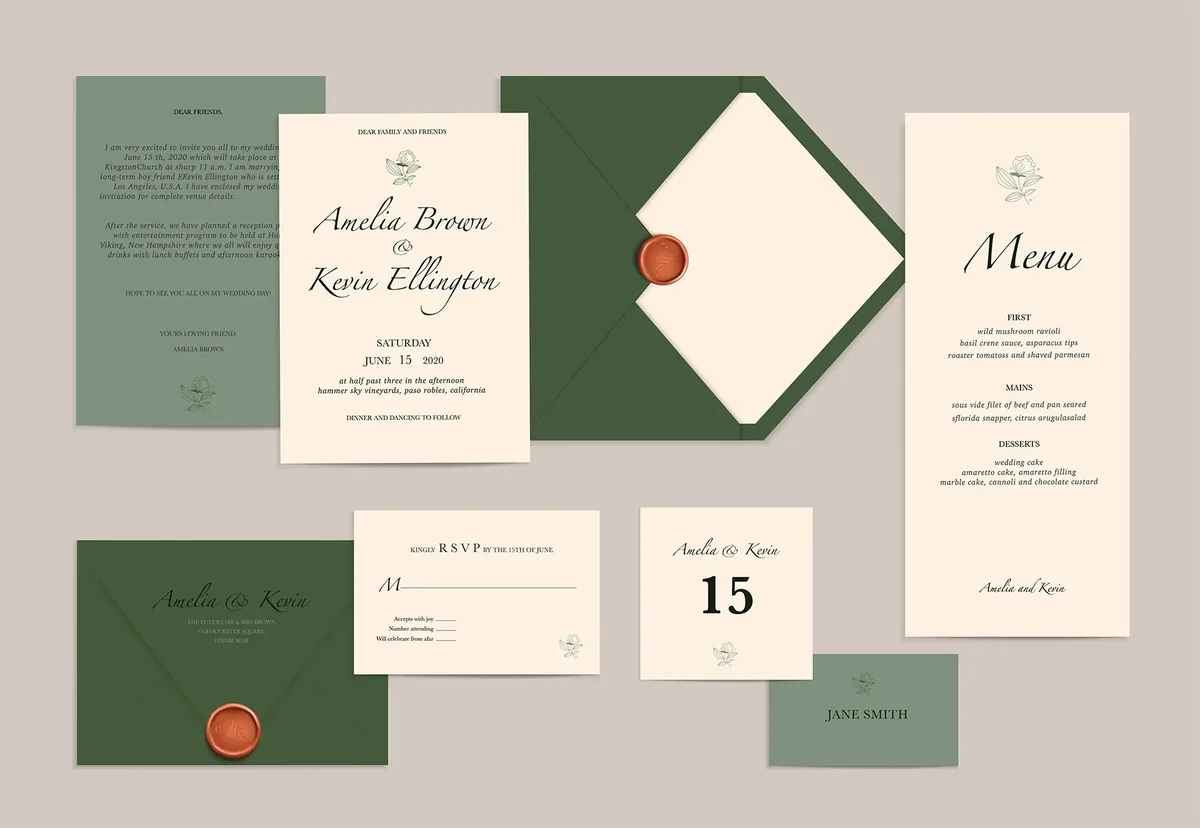
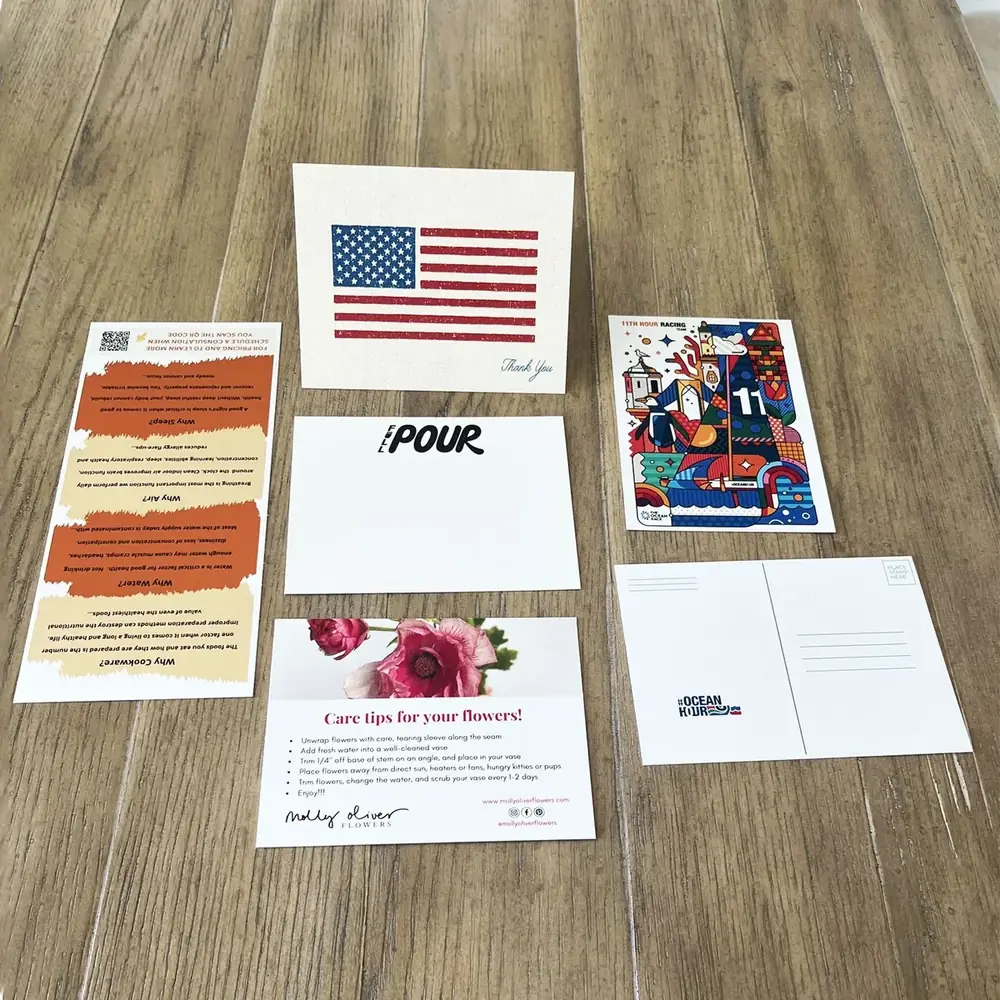
Everything below prints on recycled, FSC-certified stock with soy-based inks. Ask for a quote on any of it.

Printing something like this?
Thirty-six years of sourcing recycled stock, put to work on your job. Tell us what you need and Greg will come back with stock options, a price and a date.